

Article: Why Warm Natural Diamonds Are Suddenly Cool Again
Why Warm Natural Diamonds Are Suddenly Cool Again
For generations, diamond buyers chased perfectly colorless stones. Now some couples are deliberately choosing champagne, honey and warm natural diamonds—and the reason says a lot about how engagement rings are changing.
For decades, one of the first things consumers learned about buying a diamond was simple:
The less color, the better.
Diamond color is traditionally graded on a scale created by the Gemological Institute of America (GIA), beginning with D, representing colorless, and continuing through Z, where a light yellow or brown hue becomes increasingly visible.
And for generations, getting as close to perfectly colorless as your budget allowed was considered part of the pursuit.
But something interesting is happening.
Some of today’s engagement-ring shoppers are doing exactly the opposite.
They’re asking for warmth.
Champagne. Honey. Butter. Candlelight. Cream. Soft yellow. Even subtle brown.
Diamonds with character.
And remarkably, for some younger buyers, that visible warmth has become something of a statement—a way of choosing a natural diamond that feels individual and noticeably different from the large, extremely white diamonds that have become increasingly common with the growth of laboratory-grown diamonds.
Fashion is noticing.
Vogue recently declared champagne diamonds the “next cool-girl engagement ring trend,” while its broader look at 2026 engagement-ring trends identified champagne, honey, light yellow and smoky brown tones as an emerging direction in bridal jewelry.
So how did a characteristic diamond buyers once tried to minimize suddenly become desirable?
The answer is fascinating.
For Years, Diamond Buyers Chased “White”
To understand the trend, it helps to understand diamond color.
The GIA color scale runs from D to Z.
D-F diamonds are considered colorless. G-J are near-colorless. From there, increasing amounts of yellow or brown become progressively more apparent.
Traditionally, all other things being equal, the closer a diamond was to colorless, the rarer and more valuable it was.
That science hasn’t changed.
What has changed is fashion.
Just because one diamond receives a higher color grade doesn’t necessarily mean every person will find it more beautiful.
Think about wine, art, furniture or fashion. Technical perfection and personal preference aren’t always the same thing.
And we’re beginning to see that philosophy applied to diamonds.
Enter the Warm Natural Diamond
“Champagne diamond” isn’t a single official GIA color grade.
It’s a descriptive term commonly used for diamonds displaying beautiful warm tones—often yellowish, brownish, golden or combinations of those hues.
Some are incredibly subtle.
Others are unmistakably golden.
And when they’re chosen intentionally, the effect can be gorgeous.
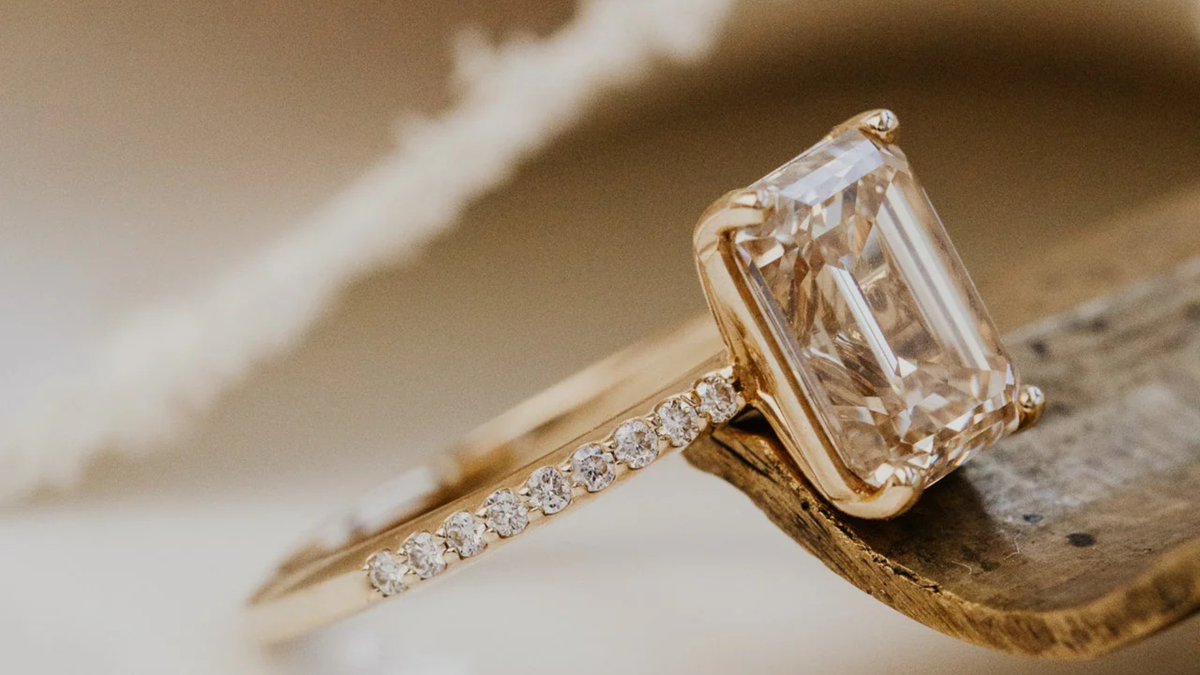
A warm diamond set in yellow gold, for example, can create an incredibly rich, harmonious appearance. An antique-cut cushion with a touch of warmth can feel romantic and almost candlelit.
Rather than trying to hide the diamond’s color, the entire design can celebrate it.


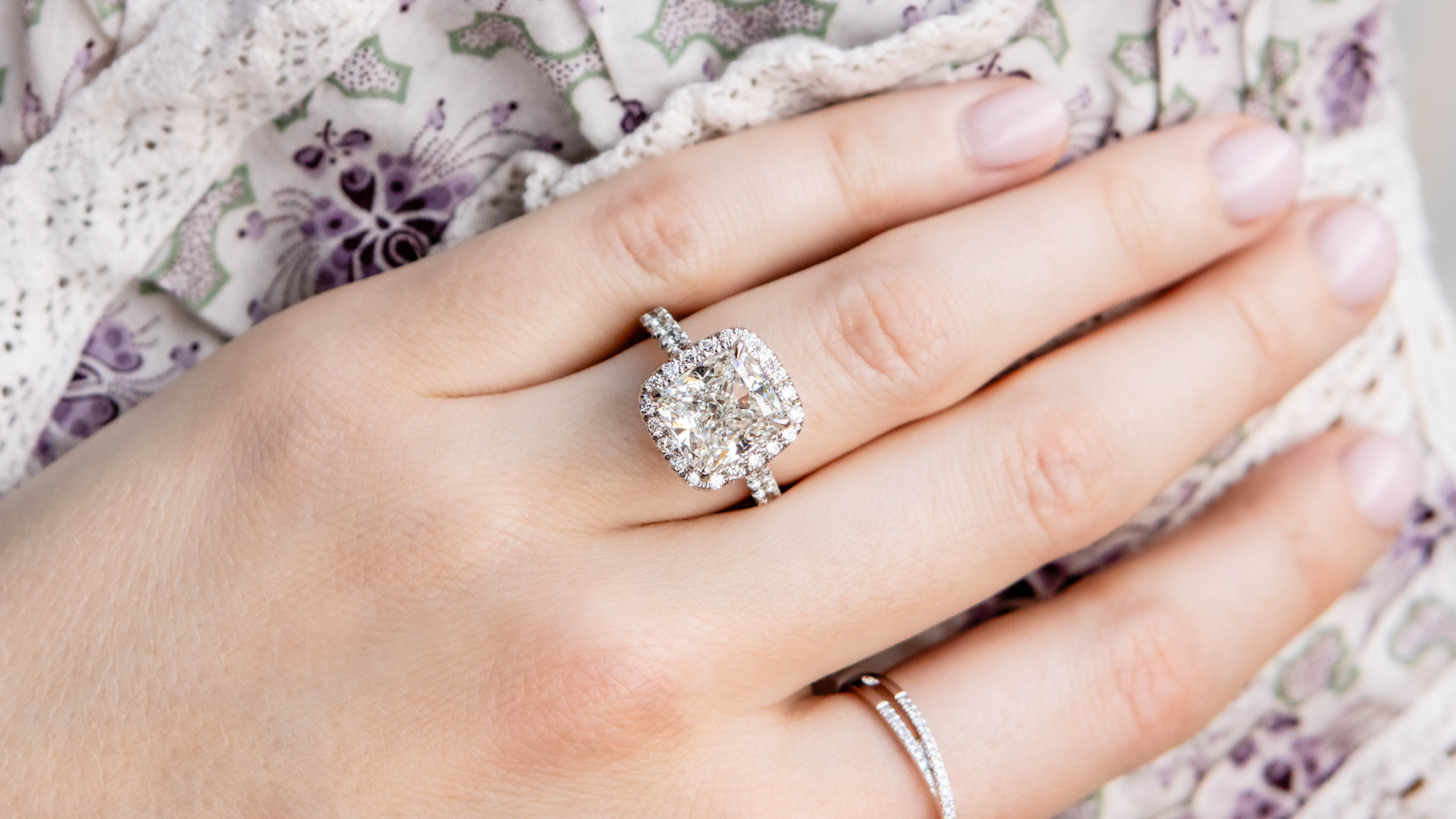
There is no single definition of beauty in a diamond. From icy colorless stones to champagne, honey and softly golden hues, subtle differences in color can give each natural diamond an entirely different personality.
Why Now?
This is where the story gets especially interesting.
Laboratory-grown diamonds have changed the jewelry marketplace dramatically.
Because large, very white, high-clarity lab-grown diamonds are now widely available, the look of an exceptionally large, exceptionally white diamond is no longer as unusual as it once was.
And some consumers—particularly younger consumers—appear to be reacting to that.
They’re looking for diamonds that feel less standardized.
Vogue recently interviewed jewelers and brides seeing exactly this shift. Some consumers described wanting something unexpected rather than “cookie-cutter,” while jewelers reported growing interest in warmer diamonds because of their character and individuality. Vogue’s broader 2026 bridal-trend coverage specifically noted that some clients actively seek warmer tones because they feel the look is more removed from lab-grown diamonds.
That’s an extraordinary reversal.
For previous generations, a visible trace of warmth might have been something a salesperson needed to explain.
For some of today’s shoppers, the warmth is the point.
“I Want It to Look Natural”
We’re beginning to hear versions of this conversation ourselves.
Some shoppers don’t necessarily want the diamond that looks the most technically perfect on paper.
They want something that feels distinctive.
Something with character.
Something that doesn’t look as though it could simply be replicated again and again.
And for some buyers, choosing a warmer natural diamond has become a subtle way of expressing exactly that.
There is an important distinction here:
Color does not prove whether a diamond is natural or laboratory-grown.
Laboratory-grown diamonds can also have visible color, including warmer hues. Determining whether a diamond is natural or laboratory-grown requires proper gemological testing—not simply looking at its color.
So a warm diamond isn’t a scientific “badge” proving natural origin.
Rather, this is about style and perception.
In a marketplace where large, very white lab-grown diamonds have become familiar, some consumers simply find the individual personality of a warm natural diamond more appealing.
The Antique-Diamond Connection
There’s another trend happening simultaneously that may help explain all of this.
Antique and antique-inspired diamonds are having a major resurgence.
Old-mine cuts, old European cuts, elongated cushions and other vintage-inspired shapes are appearing in fashion coverage and celebrity engagement rings.
And antique diamonds frequently don’t have the perfectly uniform appearance associated with modern cutting.
They may have unusual proportions.
Chunkier facets.
Broader flashes of light.
Visible inclusions.
And, often, a little more warmth.
Put those characteristics together and the result can feel incredibly romantic.
Instead of looking engineered for perfection, an antique natural diamond can look as though it has a story.


Warmth can be especially beautiful in antique and antique-inspired diamonds. Combined with larger facets and distinctive cutting styles, subtle color can create the soft, romantic appearance that is drawing a new generation to vintage-inspired engagement rings.
Yellow Gold Changes Everything
There’s another reason warmer diamonds deserve to be seen in person: the setting matters.
A diamond doesn’t live on a grading report.
It lives in jewelry.
A slightly warm diamond viewed loose against a white grading background may appear completely different once surrounded by rich 18-karat yellow gold.
The warmth of the metal can complement the diamond rather than compete with it.
This is one reason we always encourage customers to look beyond the numbers.
A grading report gives you incredibly valuable information about a diamond.
But it can’t tell you whether you’re going to fall in love with it.
Your eyes do that.
Character Over Perfection
Perhaps that’s the larger story behind this trend.
We’re living in an era of extraordinary technological precision.
We can manufacture things with remarkable consistency.
Algorithms can optimize almost anything.
Artificial intelligence can create nearly perfect images.
And laboratory technology can grow diamonds with exceptional color and clarity.
Against that backdrop, perhaps it’s not surprising that some people are becoming more attracted to things that feel individual, organic and impossible to duplicate exactly.
A little warmth.
An unusual cut.
An inclusion.
An antique stone.
Characteristics that remind us that nature doesn’t manufacture everything to look identical.
For some people, that’s becoming the new definition of luxury.


“Perfectly White Isn’t Everyone’s Perfect Anymore.”
There’s Still No “Right” Diamond
None of this means colorless diamonds are going anywhere.
A beautifully cut D-, E- or F-color natural diamond can be absolutely breathtaking. They’re extraordinarily rare and will always occupy an important place in fine jewelry.
Nor does it mean everyone should choose a warm diamond.
That’s precisely the point.
The engagement-ring conversation is becoming less about following a formula and more about discovering what you love.
For one person, perfection might be an icy-white round brilliant.
For another, it’s a champagne-colored old-mine diamond glowing against yellow gold.
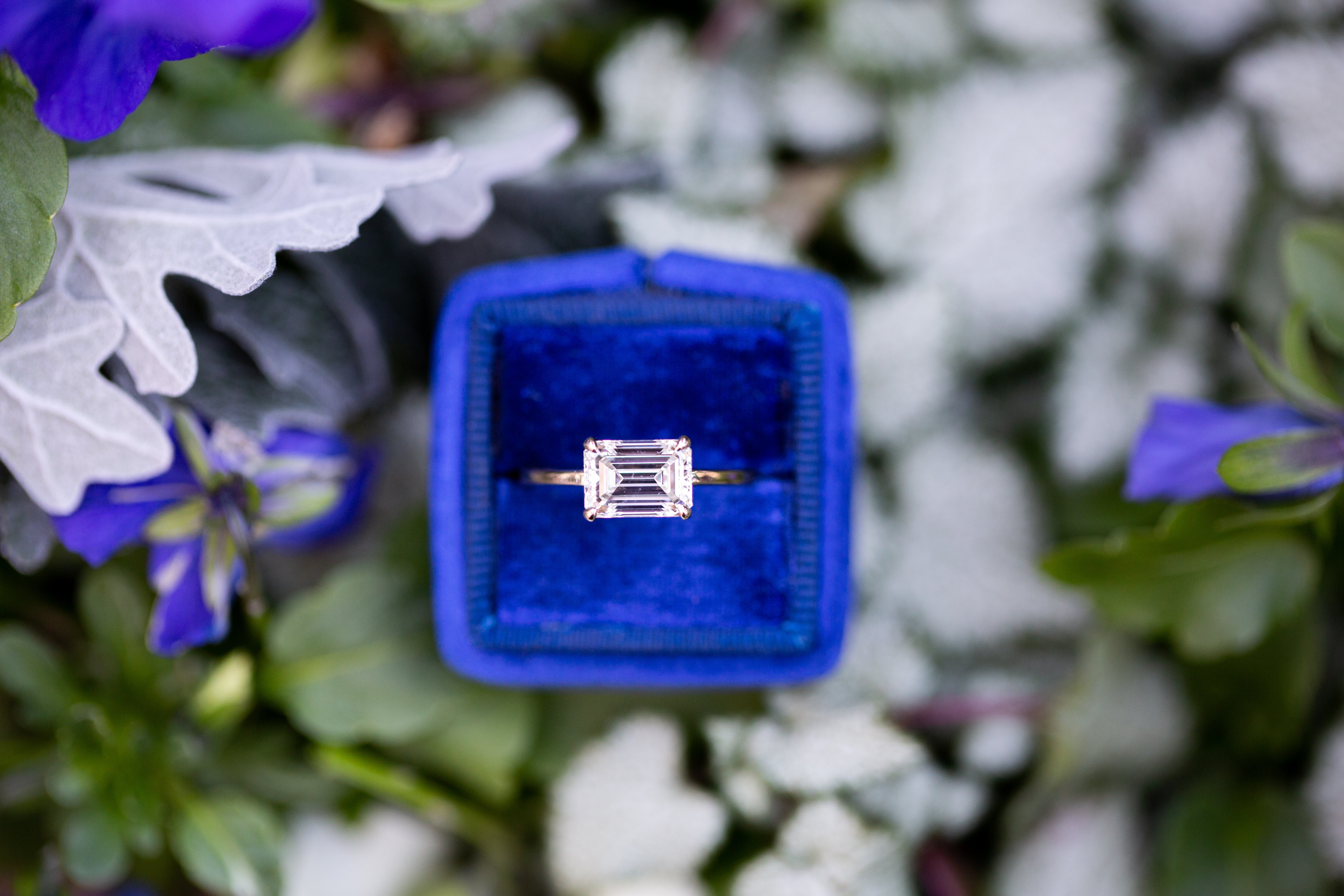
Someone else might fall in love with an emerald cut, an oval, an unusual inclusion or a diamond that’s been waiting inside an antique ring for its next chapter.
The grading report matters.
The craftsmanship matters.
The history matters.
But ultimately, jewelry is personal.
And perhaps one of the most interesting things happening in diamonds today is that a new generation is rediscovering something jewelers have known for a very long time:
Sometimes the characteristic that makes a diamond different is exactly what makes it beautiful.
This article draws on current engagement-ring trend reporting from Vogue and educational information from the Gemological Institute of America (GIA).